SAY IT ONCE

Dog Blog. Thoughts. TIps.

  • Home
  • Sign Up
  • OUR TRAINING
  • Select an Appointment
  • Group Class Sign Ups
    • Pittsburgh
    • Cincinnati
    • Washington D.C.
  • Stay & Train
    • Pittsburgh
    • Cincinnati
    • Washington D.C.
  • Virtual Training
  • Vinnie's Travel Training
    • Miami
    • Chicago
    • Cleveland
    • New York City
    • Philadelphia
  • Boarding & Daycare
  • Shop
  • Training e-book
  • Podcast
  • The Dog Derby
  • Blog
  • Videos
  • Say It Once Rescue League
    • Say it Once Rescue League
    • Free Rescue Dog Pack Walk
  • Links
  • Testimonials
  • Home

2/11/2026

30 Day Dog Reset

0 Comments

Read Now
 

If you are struggling with your dog’s behavior, try this for 30 days and you will see a HUGE change. This will take about 1.5 hours of your undivided attention each day, broken up into smaller segments.

Start your day right. Within the first 30 to 60 minutes of waking up, set the tone for the day by doing one of three things for about 30 minutes. Take your dog on a long structured walk, do an intense play session, or practice obedience in the house. Your dog has been sleeping for the last 8 to 10 hours. Work them. We want them fulfilled and tired.

When you finish, keep the leash on your dog inside the home. For the next 30 days, when your dog is awake, the leash stays on their normal collar. This allows you to reinforce commands and stop unwanted behavior immediately and consistently, on the first try.

After exercise, allow your dog time to do something without you. Working from home has created clingy dogs. Give your dog a bone or frozen Kong and either place them behind a baby gate or tether them near their bed. This part matters. Ask questions if this is confusing.

Next, feed your dog and put them away. If you leave for work, great. Just make sure your dog does not have access to the front window if barking is an issue. If you work from home, this is a great time to kennel your dog so they can get true rest.

Lunchtime will look similar but shorter. Let them out, do a quick 5 to 10 minute obedience session, and put them back. That is enough.

The 5 to 8 PM window is the witching hour for most dogs because they are underworked and restless. As soon as you wrap up work, this is when your dog gets the biggest exertion of the day. I want their tongue hanging out so you can make and eat dinner in peace. This is also a great time to practice place or tethering so your dog is not begging.

In the evening, create one hour where your dog is not allowed on the couch. I love cuddling with my dogs too, but boundaries matter. They do not need to do anything specific, they just should not have access to the couch. Use the leash, do not repeat yourself, and do not get frustrated. Also, don't be afraid to use your crate for a one hour break in the evening too. Dog's don't sleep anywhere near enough, not true rest at least. 

Throughout these 30 days, work your commands daily and focus on impulse control. Stay, place, heel, and leave it. All of this can be done inside your house and in your front yard. Stick with this for 30 days.

Consistency beats everything.
Call me if you'd like to sign up for training.
​
Vinnie Somma
C: 412-427-7507  
Email: [email protected]

Share

0 Comments

2/4/2026

Dogs Stuck in the Cold?

2 Comments

Read Now
 

I’ve seen too many dogs in the past month that have been showing very big signs of stress because their schedule and activity levels have changed so much due to the weather. Remember, dogs don’t hibernate, so when we start to do less work with them, they find new jobs, and all of those jobs are annoying as shit.
What’s the solution, especially for dogs that are not bred to be outside in this weather? (There is a percentage of dogs who will do perfectly fine; we just
have to suck it up, put on a big jacket, and get outside.)

Simple things we can do to still fulfill our dogs even though the weather sucks.

- Take your dogs on a field trip to a pet-friendly store.
- Treadmill train your dogs.
- Create a room to play with your dogs inside. (Side note: I'm not a huge fan of playing with our dogs in our main living space if possible. That is where we want our dogs to be calm, and it’s always better if you have a play area in your house, though not always possible depending on your living space.)
- Quick outdoor stints to throw the ball and get the heart rate jacked.
- Obedience work inside the home, or teaching new skills and tricks.
- “Find it” and teaching your dog how to search.

Whenever we have giant shifts in our routine, it negatively affects our dog’s behavior. It’s been a few weeks of crap weather, and if your dog has been bottled up during this time, you have probably noticed a change in your dog’s behavior. Make the appropriate change, and if you need help, don’t hesitate to reach out.

This is the time to double down on your training efforts, not push them until nicer weather. By that time, your dog will have practiced and rehearsed the wrong behavior for so long that they will become a master of the bad. In-home lessons, board and train, and virtual training options are available.

Call or text for more information or if you have questions.
412-981-2207

Share

2 Comments

1/23/2026

When Should You Start Training Your Puppy?

0 Comments

Read Now
 
The most important puppy training window happens between 8 and 16 weeks of age. What you do during this phase largely determines how easy or difficult life with your dog will be later. Early structure creates calm, confident dogs. Lack of structure creates confusion, frustration, and problem behaviors that often show up months down the road.

Many new puppy owners focus only on trying to get their puppy tired, but the real priorities in early puppy training are far more important:

  • Teaching essential commands such as sit, down, stay, heel, come, place, leave it, and no
  • Learning the SIODT Puppy Cycle
  • Learning boundaries inside the home
  • Learning how to handle frustration
  • Learning how to exist calmly around people, dogs, and everyday distractions


When puppies are biting, jumping, or constantly chaotic, it is rarely just “puppy being a puppy.” More often, it is the result of too much freedom, unclear expectations, and a lack of structure guiding their day.


This is where our puppy training cycle comes into play. Puppies thrive on a predictable rhythm. Put simply, the cycle is Exercise, Chew, and Decompression. When this cycle is followed consistently, puppies regulate themselves better, make fewer impulsive decisions, and develop the ability to relax instead of constantly seeking stimulation.


For in-home puppy training in Pittsburgh, Washington DC, and Cincinnati, we have over 1,000 five-star reviews, and the pattern is always the same. Puppies who receive clear guidance early grow into calmer, more confident dogs that are easier to live with. Puppies who are left to “figure it out” often grow into adolescents with bigger behavioral challenges that require more work later. While we can absolutely solve those problems, we would much rather help you avoid them in the first place.


Early puppy training is not about control or perfection. It is about teaching your puppy how to live comfortably in a human world without stress or confusion, and how to make better decisions. Structure creates freedom, and leadership creates security.


We also offer Board and Train programs in Pittsburgh, Washington DC, and Cincinnati if you would like to give your puppy a head start. For any of your training needs, feel free to text me at 412-981-2207.

Share

0 Comments

1/23/2026

How To Train a Reactive Dog?

3 Comments

Read Now
 
If your dog explodes on leash at the sight of another dog, person, or bike, you’re not dealing with a “bad dog.” You’re dealing with a dog who has learned that reacting works to create space. It’s the mailman effect. Mailman approaches your door, your dog barks, mailman walks away, and your dog feels  like they scared the mailman away. 

Leash reactivity usually comes from a mix of frustration, fear, and arousal, i.e. overexcitement. The leash removes a dog’s ability to move naturally, which spikes emotion and shortens decision-making. Over time, the reaction becomes rehearsed and automatic, just like breathing.

Most owners try to fix this with food alone. Treats can help in low-distraction environments, but once you step into real-world settings like busy sidewalks, parks, or neighborhood streets, food often loses its power.

We see this constantly with dogs we train in-home around Pittsburgh, Washington DC, and Cincinnati, especially in environments with tight sidewalks, frequent dog traffic, and limited space to create distance.

What training a reactive dog looks like with Say It Once Dog Training?

  • Step 1: Management. For the next 30 days we need to learn how to manage our environment better for a period of time so our dog stops practicing reactivity. Think of it like an alcoholic, the first step is to stop letting them go to the bar. 
  • Step 2: Skills. Reactive dogs need to have great obedience, and this is where training comes into play. Our job is to train your dog, and teach you, the skills necessary. We will teach your dog how to walk politely on your side, stay on their “place bed” for 30 minutes, sit, down, wait, and so on.
  • Step 3: Teaching boundaries. While obedience helps build a communication system, boundaries will start to give you authority.
  • Step 4: The “Off Switch”. We want to teach your dog a command we call the “enough” command. This command is a cue that tells your dog it’s time to settle down, and the way we start to teach our dog’s emotional regulation. 
  • Step 5: Teaching your dog to respect your “no”. Most dog’s blow off their owner when we say no. Not anymore. 
  • Step 6: Reintroduction to the trigger. ​

It’s actually a straightforward and simple process, but it does take consistent hard work, and a great game-plan. We will walk with you every step of the way, and before you know it your dog will be one of the thousands of dogs who have gone through our company, be at a group class with 20 other dogs, and our next success story. For reactive dog training in Pittsburgh, Washington D.C, or Cincinnati text Say It Once Dog Training at 412-981-2207.

Share

3 Comments

10/29/2023

Halloween Dog Training Tips

0 Comments

Read Now
 
Halloween is tomorrow!!! This presents a unique opportunity for training exercises that can further enhance the bond between you and your dog. The hustle and bustle of the season, while potentially overwhelming, can be a training gold mine if approached correctly!


If you're walking your dog during trick-or-treat


1. Stay Calm and Confident: Your energy translates directly to your dog. Maintaining a calm demeanor will help your dog stay relaxed amidst the myriad of costumes and excited children.


2. Maintain Distance: If you notice your dog is becoming anxious or overly excited, it's okay to take a step back and increase the distance between you and the trick-or-treaters. This will give your dog a moment to adjust. They have no idea what an inflatable Sumo Wrestler is.  Give them the space they need to adjust to their surroundings.


3. Use Distractions: Carry treats, and high value ones at that! When a potential distraction approaches, like a particularly loud or animated group of kids, use these to redirect and maintain your dog’s attention.


If you're staying home with your dog:


1. Utilize the 'Place' Command: Direct your dog to a specific spot, like their bed, every time the doorbell rings. This reinforces the idea that they have a safe, designated space amidst the action. Pay them, even if they alert bark at the doorbell, if they hold the command. You should be more concerned about the holding place, versus the noise. 


2. Employ the 'Stay' and 'Down' Commands: When there’s increased activity at your door, it's a great time to practice these commands. Remember to reward them for staying calm and following commands amidst distractions. You can move them throughout the house/porch to practice in different positions.


3. Leash Indoors: Even inside the home, keeping your dog on a leash can help you maintain control, especially when there's a sudden influx of visitors or noise.


4. Training Opportunities: The frequent doorbell rings and visitors can be used as repetitive training moments. For every ring or knock, have your dog execute a command.


If your dog isn’t ready:


1. Designate a Safe Space: If you feel the festivities might be too much for your dog, or you have a dog that is territorial or aggressive at the front door, consider setting up a comfortable, quiet space away from the main action. Basements or a distant room with their favorite toys, a comfortable bed or crate, and some calming music can be ideal. Exercise and Feed your dog before the chaos, and don’t be afraid to give them their favorite chew bone or Kong. 


2. Check-In Regularly: If you've put your dog in a separate space, remember to periodically check on them to ensure they're okay and to provide direction as needed.


We encourage you to view Halloween not as a challenge, but as an opportunity. With the right approach, it can be a productive training experience that leaves both you and your dog more connected and confident. Stay safe and have a spook-tacular Halloween!


Trick or Treat,


Vinnie Somma
Say It Once Dog Training 
412-981-2207


Need Additional Help? We offer virtual training, and in home training in Pittsburgh, Nashville, Cincinnati, and Washington D.C.

Share

0 Comments

4/25/2023

Rethinking Dog Parks: Exploring the Drawbacks & Alternatives for Socializing Your Dog

6 Comments

Read Now
 
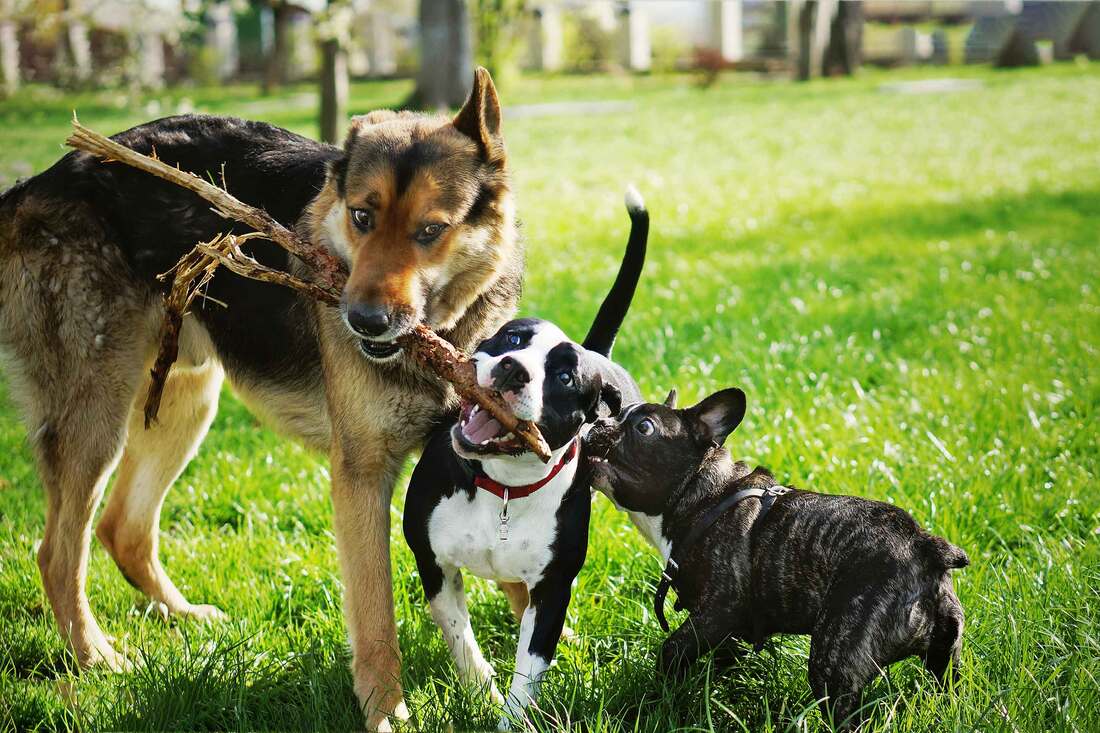
Dog parks have become increasingly popular for dog owners that live in cities and suburbs because they provide designated spaces for dogs to play and socialize off-leash in a fenced in area.  While these parks can be an enjoyable way for dogs to burn off energy and interact with other canines, they are not without serious drawbacks. In this blog post, we will discuss the potential issues with dog parks and explore alternative ways to socialize and exercise your dog.

Why Dog Parks May Not Be the Best Choice
  1. Unpredictable behavior: One of the primary concerns with dog parks is the unpredictable behavior of other dogs. Not all dog owners are responsible or knowledgeable about proper dog socialization and etiquette, which can lead to aggressive or inappropriate interactions between dogs.
  2. Health risks: Dog parks can also pose health risks, as they can be breeding grounds for parasites and diseases, such as fleas, ticks, and canine parvovirus. If not all dogs visiting the park are up-to-date on their vaccinations and parasite preventatives, the risk of disease transmission increases.
  3. Overstimulation: Dog parks can be overwhelming for some dogs, particularly those who are shy, anxious, or reactive. The chaotic environment, combined with a large number of unfamiliar dogs, can lead to stress, fear, and potentially aggressive behavior.
  4. Inadequate supervision: Many dog owners become distracted or disengaged while at the dog park, leaving their dogs unsupervised. This lack of supervision can result in dogs engaging in unsafe or inappropriate behaviors without intervention.
  5. Reinforcement of unwanted behaviors: Unstructured playtime at dog parks can sometimes reinforce unwanted behaviors, such as jumping, barking, or resource guarding. These behaviors can become more challenging to manage in other settings if they are consistently reinforced at the dog park.
  6. Although your dog is in a fenced in area, and it seems as though you have sense of control over them because they cannot get away from you, taking dogs to the dog park that you do not have verbal control over will only give you less control in the future. It’s common to watch owners try to trick their dog when leaving the dog park, or chase them around the fence to catch them. 
  7. It takes one traumatic event for your dog to develop a serious behavioral issue. When taking your dog to the dog park, you are trusting other dog owners to bring in a behaviorally sound dog into the park. I’m not sure about you, but I do not want to trust my dogs welfare to other people I do not know.

Alternative Ways to Socialize and Exercise Your Dog
  1. Playdates: Arrange playdates with dogs that you know are well-socialized and compatible with your dog. This controlled environment allows you to closely monitor the interactions and ensure that play remains safe and appropriate.
  2. Training classes: Enroll your dog in Say It Once Dog Training in Cincinnati, Pittsburgh, and Nashville. These classes provide opportunities for controlled socialization and mental stimulation while also strengthening the bond between you and your dog.
  3. Structured group walks: Participate in group walks or hiking events with other dog owners. This allows your dog to interact with other dogs in a more controlled and less chaotic environment than a dog park.
  4. Leash walks and exploration: Take your dog on regular leash walks and explore new environments, such as nature trails or pet-friendly public spaces. This not only provides physical exercise but also offers mental stimulation through exposure to new sights, smells, and sounds.
  5. If you are a Say It Once Dog Training client, join our Community Facebook page and meet up with other local families that have gone through the same life changing dog training program that you have! 

While dog parks can offer a convenient space for off-leash play and socialization, they are not without their potential drawbacks. By considering the risks and exploring alternative ways to socialize and exercise your dog, you can ensure that your furry friend has a safe, enjoyable, and well-rounded social experience. Remember that every dog is unique, and it's crucial to find the activities and environments that best suit your dog's individual needs and temperament.
Picture

Share

6 Comments

10/28/2022

Seminar Series

3 Comments

Read Now
 
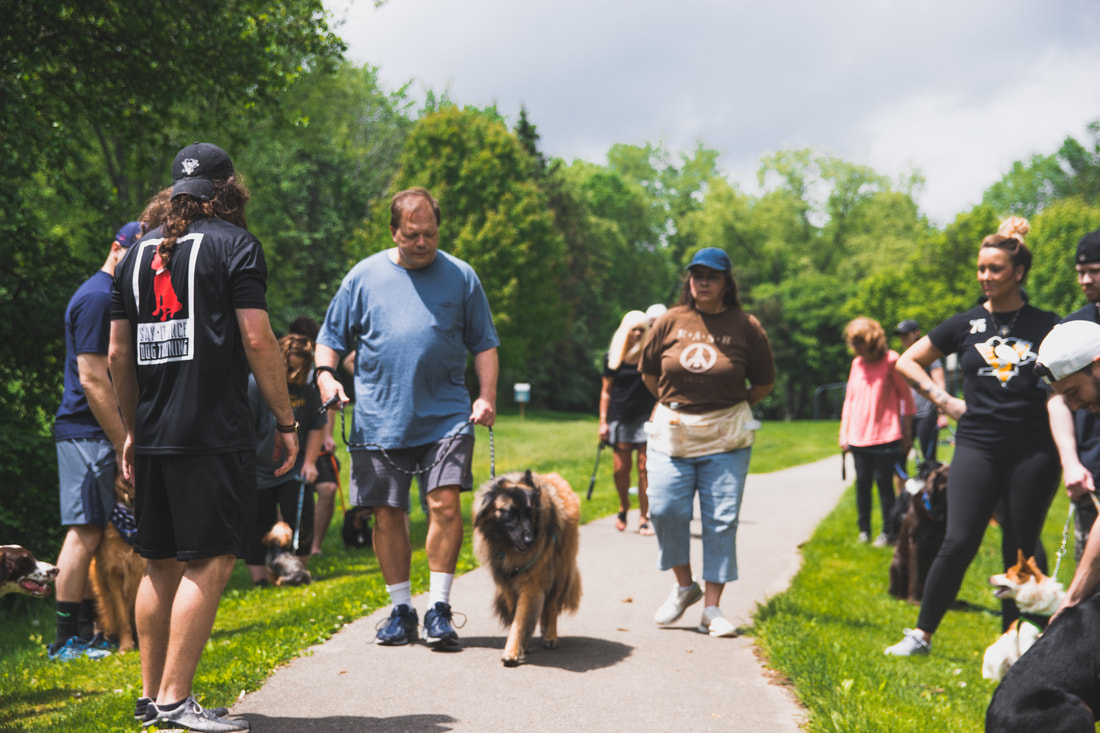
Hey guys, Vinnie with Say It Once Dog Training here! I am pumped that you are going to be apart of this amazing event. With that being said, I want to lay out some ground rules to keep everyone and every dog safe, as well as set you both up for success to learn as much as possible for the days ahead.

Don’t pet dogs that are not yours. You’ve watched enough of my content, don’t make me yell at you please ;)

If you have a working dog spot, make sure your dog has a tight fitting collar on, no harnesses, and a short 4-6 foot leash. No Flexi leads, or anything with bungee. 

If you are bringing a dog have their vaccination records with you, some facilities require it for your dogs to enter. (Group class dogs do not have to bring this, only dogs entering the facilities)

BRING A CHAIR! This is extremely important. Please do not forget

Bring a notepad, or your phone to take notes. I will be going over a boatload of information, and you are going to want to take as many notes as possible.

Do not feed your dogs their breakfast, bring it with you for the day, as well as a higher value treats for the seminar. 

No Dogs should meet during this event, their will be enough space for everyone 

You will want to have your dog crate trained, and bring a crate with you for dogs in working spots. 

If your dog is a bite risk, please bring and have muzzle already on before entering the building. 

Most importantly, don’t be nervous. If you have a challenging dog, join the club. That’s why you are coming. I hope the day isn’t filled with 10 easy dogs, I want to work, I want to challenge, and show you how I handle these dogs. 

Lastly, don’t make it a secret that you are coming. Please share this with friends and family so that we can get as many people on the Properly Trained Human’s train as possible. Thank you, and I will see you soon!
Picture

Share

3 Comments

9/30/2022

Vet Visit Dog Training?

0 Comments

Read Now
 
How does your dog do going to the Veterinarian Hospital? Unfortunately most dogs view going to the vet as a stressful experience, and it makes it difficult for them, dog owners, and the staff at the hospital. In some severe cases it makes it almost impossible for veterinary staff to give the dog the thorough proper checkup they need because of the dog’s behavior. Did you know you can help your dog have a better vet visit? Let’s start by focusing on these changes. 


First and foremost, Say It Once Dog Training offers classes at certain veterinary hospitals throughout Pittsburgh! Be sure to tag your vet, vet techs and see if we can run classes at your veterinary hospital to make dog’s more comfortable going to hospital! 


  1. Watch your dogs arousal levels. Arousal , or excitement” is not good at the vet’s office and often turns into nervousness really quick. Your goal is to keep a calm, happy dog! 
  2. Walk your dog before you go! Get them in the training zone, as well as to keep them calmer for the visit.
  3. If you have a dog that has a bite history, you should be the one putting the muzzle on, not the veterinarian! Also, if the only time you put the muzzle on is for the vet, your dog will eventually put 2 and 2 together and associate muzzle equals bad. This cannot happen! You need to muzzle train frequently, and all dogs would benefit from being able to have a muzzle put on without stress.
  4. Don’t put them  in the car only for the vet. The car shouldn’t come in a negative association or anywhere you go will be stressful for your dog. Same as muzzle, it should equal vet, it should equal a calm place to chill out inside of. More car training in your driveway!
  5. Get to the vet early. When you arrive, open up your car door and let your dog chill out without being able to exit the car for a few minutes. Release your dog from the car and train for 2 minutes. Go through a pattern of behaviors that your dog knows. Heel walk, sit, down, treat etc. Get your dog an early win so they are seeking food. (If your vet has a big grassy area, release your dog from heel and let them investigate the grassy area.
  6. When you go into the vet’s office, stay cool calm and collected, and walk your dog up to the scale that every vet office has in the building. Make sure people don’t go crazy and shower your dog with affection. Remember, we are trying to keep our dog calm and happy, not excited and freaked out. Put them in a sit, and tell them to “place” onto the scale. Reward the dog and repeat. 
  7. Walk over to the waiting station, and put your dog into a down. (You need to be practicing the behaviors at your house, with the leash on. Replicate by walking your dog from place, to the hardwood floor or tile floor of your kitchen and put your dog into a down on the hard floor.) 
  8. Advocate for your dog’s space!!! Do not let any other dog’s intrude into your personal space, and be sure to put your dog in a position they aren’t getting bombarded by people coming in. 
  9. When they bring you back into the room, I personally train. I place my dog on the bench in the office, reward, back onto the scale in the room, reward, and then back into a down. You don’t want to keep them so busy that you are adding more stress than necessary, but I want them to get rewarded enough that they are eager to continue. Don’t use a boring reward here, use the big boy if needed. 
  10. Now the exam begins. This also serves as another reminder to follow @sayitoncerescueleague and to ask/tag your vet below to host Say It Once classes at their office! 
  11. Have you ever thought about giving your dog fake exams at your house? Put your dog on the leash, walk them into your laundry room, and calmly give them a exam and massage. Check your dog’s ears while massaging their head, lift up your dog’s legs, put your finger in their butt (joking, just making sure you are still reading) inspect their teeth and nails! 


Personally, I would take multiple trips to the vet’s office without actually getting an exam. I would ask my vet if it’s okay to come weigh my dog on a non busy hour, practice place on the scale, and downs in the waiting room!


Love your Vet? I’d like to hear any recommendations below ⬇️ 


Thank you!

Share

0 Comments

9/19/2022

Why I Hate Hand Signals

5 Comments

Read Now
 
Do you want to know why I hate hand signals? 


There is a few reasons why I hate using hand signals in dog training, and I’m going to go over the biggest two. I always get push back from owners on, but my dog listens really well to the hand signal. I know they do! I know they learn faster through using hand signals (also understand them when teaching all behaviors we lure with our hand, and develop a hand signal with every command. However, I do immediately get away from using the hand signal when I feel like the dog has an understanding of the word. Let’s go over why.


  1. Hand signals are only reliable when your dog is looking at you. Do you I think I’m going to have a hard time getting my dog to listen if I have their 100 percent attention? No. Your verbal cue needs to be strong because you are going to rely on this in almost all scenarios, whether your dog is looking at you or not, whether your hands are full or not, or whether you are looking at your dog or not. Hand signals can only be done in one of those scenarios. That’s not good enough.
  2. Humans lack the ability to separate word from hand sign. Your word should always come first. Always. When teaching your dog sit, down anything, before you offer a hand signal, you must say the word for your dog to understand. Think of this. If I where to punch you in the face and say purple at the same time, and repeat this process three times, the fourth time that I say purple without punching you in the face you're gonna have no idea what's going to happen next because you never had time to process the purple man punch in the face. You were too worried about the physical feeling of punch in the face instead of listening to the word purple. However if I said purple, delayed a half a second and punched you, repeated a second time, on the third attempt that I say purple you would be ducking out of the way like you're in the movie the matrix. This is also how do you have to train your dog. You need to incorporate the verbal cue before there is any movement from your body.


If you don't believe me, I want you to try training your dog on all of their commands this week without moving your body at all. Film yourself, and watch. See if your dog can listen to only with your verbal cue, and see if they listen quickly. If they're not, we need to go back to the basics. I want you to tag yourself while training your dog with the #Sayitoncehandsfree Tag me in it, and let’s see how you train without your hand signals!


P.S. I teach all of my dogs and my clients dogs on hand signals, the dog understands and very quickly, but I get away from them immediately because I want to focus more on my verbal cue. That doesn't mean I will never use a hand signal, it just means that I need to put more emphasis type my words need power.

Share

5 Comments

9/11/2022

Dogs, NFL, and Guests!

6 Comments

Read Now
 

Dogs and NFL Sundays!
If you like to have people over for Sunday Football, or guests in general, you are going to want to read the three main points of this quick blog. Having a game-plan (pun intended) is the easiest way to enjoy your guests while having a well behaved dog. 


Work your dog before the guests come over. This one almost seems like a no brainer, but let me add to it. A dog that has had a walk and a few training sessions is much easier to control than a dog that has been caged up all day. Have a good play session in the morning, still practicing your sit, down, stay obedience training during the session. Run them hard and test their impulse control harder. Afterwards, take your dog for a 30 heel session an hour or two before your guests come over, practicing chaining directions and having your dog focus on you. The goal is not to run and get your dog wound up, but instead, calm and in control. Immediately after your walk, place your dog on their dog bed for a cold down period.

The leash is your biggest help, and never forget it! Leave your leash on after your walk, and use it wisely while your guests are coming over. How do we use it? To direct our dog to where they should be (whether you want them on place or by your side), to correct our dog for jumping on guests, or bring our dog with us when we need control. The leash is a communication and control tool. Use it to tell your dog what you want them to be doing, not just what they shouldn’t be doing!

​NFL parties, guests coming over, and holidays means lots of alcohol and lots of food. Unfortunately we can’t train all of our guest not to drop chicken wings on the ground, to lock the garbage can, or not to leave food items on the coffee table. However, we should set up our dog up with scenarios this morning, and the next few weeks, to make sure our dog understands “Leave it” command. You should be challenging your dog, with the leash on, while dropping food items on the ground, putting plates on the edge of the table, all while you still can keep an eye on your dog. With enough good repetitions, you won’t have to keep your eye on them forever!


Bonus: Take your dog to a group class to really tire them out before your guests come over. Your dog needs to have a good time on the weekends too. Try to have your guests not acknowledge your dog for the first 5 minutes while they come in. Walking in and parading all over your dog is only going to overexcite them. An excited dog, is a jumping and barking dog. 

When you bring your guests over, it's always best to either be holding the leash, or have your dog in stay on their place/crate. Once the guests arrives you want them to 
immediately to head to the kitchen table or counter, and not to the couch. The couch is too inviting, and your dog will have an easier time calming down if the guests are sitting higher up without the ability of your dog to crowd their space. 


If you have any questions, or would like to sign up for a training session or follow up session, reach out to me personally and I will get it taken care of. Thank you!

Vinnie 
[email protected]

Picture

Share

6 Comments
<<Previous
Details

    Vinnie Somma

    I Train dogs well. Spelling is questionable

    Archives

    February 2026
    January 2026
    October 2023
    April 2023
    October 2022
    September 2022
    July 2022
    April 2022
    February 2022
    November 2021
    September 2021
    June 2021
    September 2020
    January 2020
    November 2019
    December 2018
    February 2017

    Categories

    All
    Playtime

    RSS Feed

Say It Once Dog Training

Dogs meet our needs with their unconditional love everyday.  Return the favor. Call today to learn how to become not just a dog lover, but a knowledgeable dog owner! Your dog will thank you for it.


Hours

Monday-Sunday: 9am - 9pm

Telephone

412-981-2207

Email

[email protected]
  • Home
  • Sign Up
  • OUR TRAINING
  • Select an Appointment
  • Group Class Sign Ups
    • Pittsburgh
    • Cincinnati
    • Washington D.C.
  • Stay & Train
    • Pittsburgh
    • Cincinnati
    • Washington D.C.
  • Virtual Training
  • Vinnie's Travel Training
    • Miami
    • Chicago
    • Cleveland
    • New York City
    • Philadelphia
  • Boarding & Daycare
  • Shop
  • Training e-book
  • Podcast
  • The Dog Derby
  • Blog
  • Videos
  • Say It Once Rescue League
    • Say it Once Rescue League
    • Free Rescue Dog Pack Walk
  • Links
  • Testimonials
  • Home